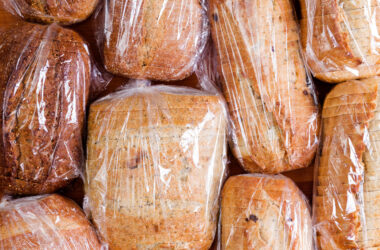

Flowpacks can run with different types of film, such as plastic films, polypropylene or polythene… and also with non-coated paper film!
What are the differences?
Polythene is formed through the polymerization process of monometric units of ethylene, which are two units of carbon alkane [-CH2CH2-]. It can be classified into three main categories: high, medium and low density. Polythene is known for its chemical resistivity and it means that it can be corroded only with specific acids and bases. In economic terms, it’s one of the most expensive films due to its pureness. It’s identified with the abbreviation PET.
On the other hand, polypropylene (abbreviation PP) is composed of the polymerization process of monometric units of propylene and more precisely three units of carbon alkane [-CH2(CH3) CH2-]. It’s generally used for the production of printed materials. This film is not as transparent as the polythene one, but it can be made with this feature through the non-colouration. Most of the polypropylene’s weights are among the weights of polythene of high and low density. It can be damaged when it’s exposed directly to the light and it can provoke oxidation reactions, dangerous for our health and safety.
Non-coated paper hasn’t got a coat to be filled in with fibres. The printed can be less precise and well-defined but it’s ideal for products with a lot of text.
Films and Environment
Everyone pays more attention to our environment thanks to laws like the “Plastic tax”, which imposes an amount of 0.45 euros whenever we sell 1kg of single-use plastic products. The purpose of this tax? Easy, the promotion of a gradual decrease in production and as a consequence the less usage of disposable plastic. And for transgressors fines never lack! It will be imposed a fine of 500 euros for those who don’t pay. For any delays, not less than 250 euros have to be paid.
And among these bureaucratic matters, there’s also Greta Thunberg, who gave an important contribution and influenced the world with her speeches and words. So, how can we manage this problem? We all know that Plastic films generally take years to degrade completely in nature.
Well, PET film is subjected to a downcycling process, but it can be recycled easily because it hasn’t got additional plastic materials, such as chemical substances, and uses less resources. So, can it be the perfect solution? Actually no. The result of the downcycling process is a plastic material with a low quality. Moreover, PET generates more than about 100 times toxic emissions to the environment.
So, what about polypropylene? PP can be mixed with different types of biodegradable polymers such as polylactic acid (PLA) and thermoplastic starch (TPS). So it could be a solution to reduce the environmental impact.
Or we can use bio-plastic which comes from vegetable raw materials and the production process doesn’t release CO2 and doesn’t waste a lot of water. For example, sugar cane is recycled to create bio-plastic or it can be produced with the employ of corn and wheat. The degradation of 90% takes about 6 months, so this material can last for 5 years and it’s one of the first solutions to the marine littering problem (marine debris). A great success for nature and firms! is it?
The paper reel is one of the best material.
What about paper instead? Well without any doubt the paper reel is one of the best materials. In Northern Europe it’s often used, more than here in Italy, but it’s not a problem for us! Adjusting our machines to this paper reel is enough! To be sure, it’s favourable to send us your reel, so we can test it!

Waste disposal
How about waste disposal? During these years, there were a lot of problems due to this process. So we have to pay attention to how we can throw away our waste! It’s practical also to contact our waste treatment plant in our country or even contact some companies which can do this action for us!
European Responsability
The European Union, as well as many other countries in the world, decided to adopt the “Strategy for Plastic in a Circular Economy” in order to create an European legislation for every member state in all the EU and to sensitize all customers to buy biodegradable products and non-polluting. An excellent beginning to have a cleaner future!